
Solutions · IBC Filling Systems
Controlled Filling. Reduced Dust. Better Product Containment.
Filling an Intermediate Bulk Container (IBC) is more than directing material into a vessel. The process needs to manage material flow, displaced air, dust generation and the quantity being filled.
For fine powders, low-density materials and products requiring controlled handling, conventional filling arrangements can create additional challenges for operators and production teams.
ISL Technologies engineers IBC Filling Systems to provide a controlled interface between upstream material-handling equipment and the IBC.
By integrating filling heads, conveying systems, weighing equipment and appropriate dust collection arrangements, ISL can configure a filling solution around your material, required fill quantity and process conditions.
Fill IBCs With Greater Control Over Material, Quantity and Transfer.
What Makes IBC Filling Challenging?
Filling the Container Is Only One Part of the Process
As material enters an IBC, air inside the container is displaced. Depending on the material and filling arrangement, dust can escape through the filling point or surrounding connections.
At the same time, manufacturers may need to achieve a defined fill quantity while keeping the process compatible with upstream equipment.
 01
Dust Generation
Fine powders can become airborne during filling, creating dust around the filling point and surrounding equipment.
 02
Operator Exposure
Open filling arrangements and manual intervention can expose operators to materials that should remain within a controlled process.
 03
Product Loss
Material escaping during filling can lead to product loss, housekeeping requirements and additional cleaning.
 04
Fill Quantity Control
When a specific quantity is required, the filling arrangement needs to accommodate the appropriate weighing or measurement method.
 05
Displaced Air Management
As material enters the IBC, the air inside the container must be allowed to escape through a suitable route.
 06
Upstream Equipment Integration
Filling systems need to connect with the equipment supplying the material, whether that involves a silo, hopper, pneumatic conveying line or mechanical conveying system.
The challenge is to fill the IBC while managing material flow, quantity and dust at the same time.
The ISL Solution
A Filling System Designed Around Your Process
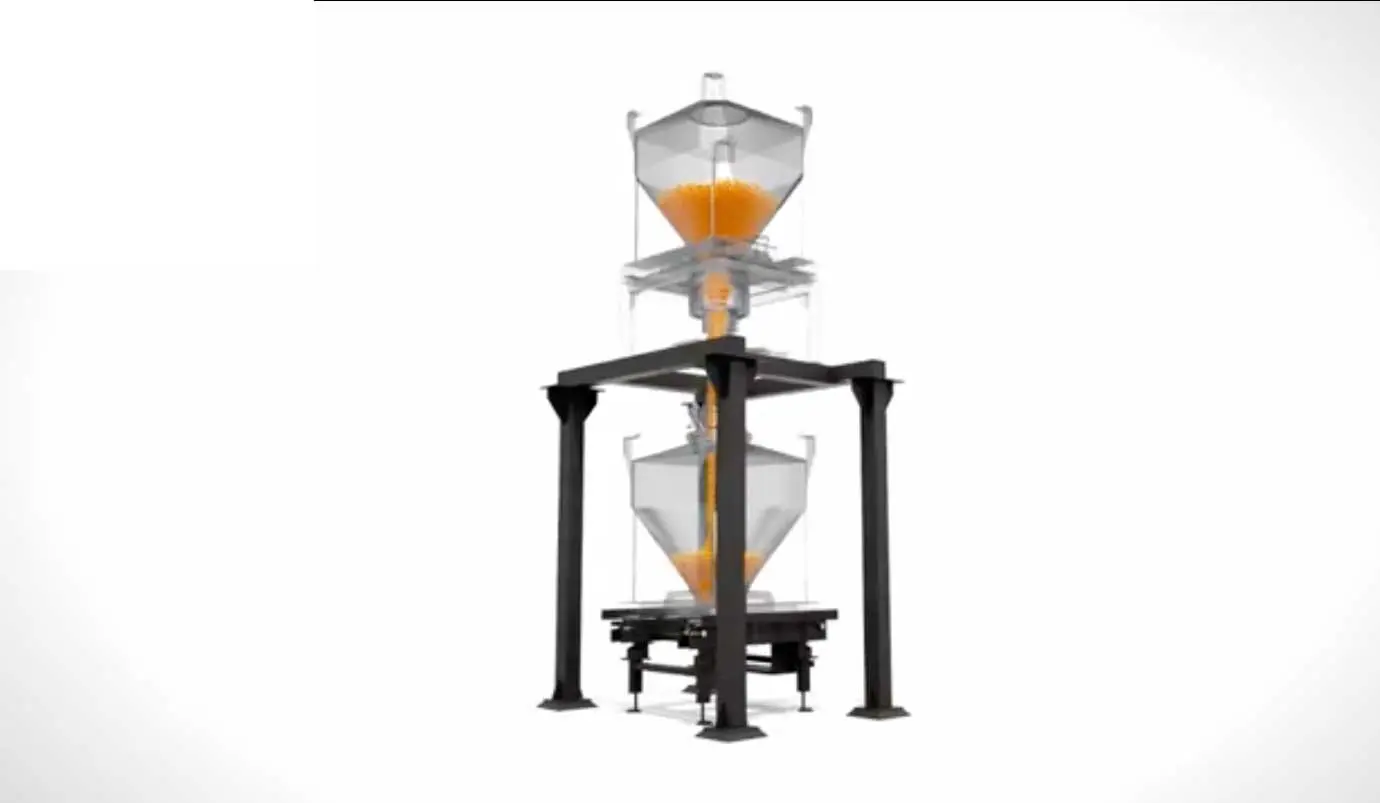
ISL Technologies provides IBC Filling Systems that connect the upstream material supply with the IBC through a controlled filling arrangement.
The system can be configured around the material being handled, the required fill quantity, the available utilities and the wider production process.

Controlled Filling Interface
The IBC Fill Head creates a dedicated connection between the process line and the IBC inlet.

Dust Containment
The ISL Fill Head uses a cyclonic design and integrated vent pipe. When paired with an appropriate dust collector system, it is designed to support dust containment during filling.

Weighing & Fill Quantity Management
Where a defined fill quantity is required, weighing equipment can be incorporated into the filling arrangement.

Upstream Integration
The system can connect to silos, hoppers, pneumatic conveying systems or mechanical conveying systems according to the application.

Configurable Operation
ISL offers electrical lifting column, pneumatic cylinder and manual Fill Head configurations to accommodate different operating requirements.
 The objective: a filling arrangement that works with your material, equipment and production process.
How an ISL IBC Filling System Works
From Material Supply to Filled IBC
A filling system connects the material source to the IBC through a coordinated sequence.
The actual operating sequence, controls and fill-quantity method depend on the selected configuration.
The Technology Behind Controlled IBC Filling
The Components That Make the Difference
A filling system is only as effective as the equipment and connections that work together. ISL can combine the following components according to the application.

IBC Fill Head
The Fill Head provides the connection between the incoming material stream and the IBC. ISL offers three configurations: electrical lifting column, pneumatic cylinder and manual. The appropriate option depends on the required actuation method and operating arrangement.
Explore IBC Fill Head

Dust Collection
Dust collection can be integrated with the filling arrangement to manage dust generated during material transfer. The dust collector should be selected according to the material, filling conditions and required containment performance.

Weighing Equipment
Where the process requires a defined quantity, weighing equipment can be incorporated into the system. The appropriate arrangement depends on the required fill accuracy, operating method and system configuration.

Conveying Systems
Pneumatic or mechanical conveying can supply material to the filling point, depending on the material and process requirements.

IBC Containers
The IBC receives and holds the material after filling. ISL offers stainless steel and polyethylene IBC configurations for different bulk material handling applications.
Choose the Right Fill Head
Three Ways to Position the Filling Interface
- 01
Electrical Lifting Column
For electrically actuated positioning
The Fill Head is raised and lowered using an electrical lifting column.
This option can suit installations where electrical actuation is preferred.
- 02
Pneumatic Cylinder
For pneumatic positioning
The Fill Head uses pneumatic cylinders for raising and lowering.
This option can suit facilities where compressed air is available and pneumatic actuation fits the operating requirements.
- 03
Manual
For manual positioning
The manual configuration provides a straightforward option where powered actuation is not required.
Not sure which configuration fits your process?
ISL can assess the filling sequence, available utilities and required level of automation to help determine the appropriate arrangement.

Filling Different Bulk Materials
The Material Determines the System
Different powders and bulk solids behave differently during filling. Their properties influence the filling equipment, transfer arrangement and dust management requirements.

Fine Powders
Fine particles can become airborne during transfer, making the filling interface and dust collection arrangement particularly important.

Low-Density Materials
Low-density materials may require careful consideration of filling rate, material behaviour and the volume occupied within the IBC.

Granules & Pellets
Granular and pelletized materials may have different flow characteristics from fine powders, influencing the filling arrangement.

Moisture-Sensitive Materials
Where material properties can be affected by moisture, the process environment and material-transfer connections need to be considered.

Formulated Products
Where multiple ingredients or formulations are handled, the filling system should be considered alongside batch identification, weighing and changeover requirements.
Every application should be assessed according to the actual material characteristics and process conditions.

Designed for Accurate Filling
Put Fill Quantity at the Centre of the Process
For many applications, filling is not complete simply because the IBC has received material. The quantity filled must also meet the production requirement.
ISL filling systems can be configured to incorporate weighing equipment where required.
The achievable accuracy depends on the weighing equipment, material characteristics, filling rate and system configuration. Specific accuracy figures should be established for the individual application.
- 01
Define the Target Quantity
Establish the required fill quantity for the application.
- 02
Select the Measurement Method
Determine the appropriate weighing or measurement arrangement for the system.
- 03
Integrate With the Filling Sequence
Coordinate the weighing arrangement with the filling process and associated equipment.
- 04
Complete the Filling Operation
Use the defined operating procedure to achieve the required quantity.
Dust Containment During Filling
Control the Filling Interface. Manage the Airflow.
Dust containment requires consideration of more than the point where material enters the IBC.
As the container fills, displaced air needs a suitable path to leave the vessel. The filling arrangement must account for this airflow while managing the potential for dust to escape.
The ISL Fill Head incorporates:

Cyclonic Design
A filling arrangement designed to support dust containment when paired with an appropriate dust collector.
Integrated Vent Pipe
Provides a route for displaced air to exhaust from the IBC.
IBC Filling Interface
Creates a dedicated connection between the process line and the IBC inlet.
Integrated System Design
Allows the filling arrangement to be considered alongside the material source, dust collection and other equipment.
The actual containment performance depends on the material, operating conditions, connections and complete system configuration.
Integrate Filling With Your Existing Process
From Silo or Hopper to IBC
An IBC filling system should fit into the wider production process rather than operate as an isolated piece of equipment.
ISL can configure the filling arrangement around different upstream material sources.
Silo
IBCConnect a bulk storage silo to the IBC filling point.
Hopper
IBCTransfer material from a process hopper into the IBC.
Pneumatic Conveying
IBCIntegrate the filling point with an upstream pneumatic conveying system where suitable.
Mechanical Conveying
IBCConnect compatible mechanical conveying equipment to supply material to the filling arrangement.
Weighing
FillingIncorporate weighing equipment where the process requires a defined fill quantity.
The final design depends on the available equipment, material characteristics, plant layout and filling requirements.
What Can a Better Filling System Help You Achieve?
Improve the Way Material Enters Your Process
A properly configured IBC filling system can help address several operational priorities.
The actual benefits depend on the application, equipment configuration, material properties and operating procedures.
- 01
Better Dust Management
A suitable filling interface and dust collection arrangement can help reduce dust escape during material transfer.
- 02
Reduced Manual Intervention
Powered Fill Head configurations can reduce the need for manual positioning of the filling interface.
- 03
Improved Fill Quantity Control
Weighing equipment can be integrated when the process requires defined quantities.
- 04
More Connected Equipment
Connect the upstream material source, filling arrangement and IBC within one coordinated process.
- 05
Flexible Configuration
Select electrical, pneumatic or manual Fill Head operation according to the application.
- 06
A More Organized Material Flow
Establish a repeatable filling sequence that fits into the wider IBC handling workflow.

Why ISL Technologies?
Filling Equipment Designed Around the Application
Selecting an IBC filling system involves more than choosing a filling head. The material source, container, fill quantity, dust management and operating sequence all influence the final arrangement.
Integrated Bulk Solids Expertise
ISL's product range includes IBCs, Fill Heads, discharge equipment, blending systems and related bulk solids handling technologies.
Multiple Fill Head Configurations
Electrical lifting column, pneumatic cylinder and manual options support different positioning and operating requirements.
Dust Management Considerations
The Fill Head design incorporates a vent pipe and can be paired with an appropriate dust collector system.
Weighing & Process Integration
The filling arrangement can be designed around the required quantity-control method and upstream material supply.
Application-Specific Engineering
The system can be developed around the powder, facility layout, operating conditions and downstream workflow.
One filling point. A system designed around the entire process.
ATEX & Specialist Handling Requirements
Start With the Application Requirements
Some filling applications have additional requirements relating to combustible dust, hazardous areas, hygiene or material exposure.
These requirements need to be established before equipment is selected.
For applications requiring ATEX-compliant equipment or installation, the applicable area classification, material properties, equipment certification and system-level requirements must be assessed.
ATEX compliance should not be assumed for every standard ISL filling configuration.
The suitability of a proposed arrangement must be confirmed against the specific application and relevant documentation.
Similarly, hygienic requirements should be evaluated according to the material, contact surfaces, cleaning procedures and applicable standards.
Discuss Your Application RequirementsFAQ
Frequently Asked Questions
Can't find your answer? Our engineers are happy to talk through your application.
Ask an EngineerAn IBC Filling System transfers powders, granules or other bulk materials from an upstream source into an Intermediate Bulk Container. Depending on the application, it can include a Fill Head, conveying equipment, weighing equipment and dust collection.
ISL's Fill Head incorporates a cyclonic design and an integrated vent pipe. When paired with an appropriate dust collector system, it is designed to support dust containment during filling. Actual performance depends on the material and complete system configuration.
ISL Fill Heads are specified for powders, granules and pellets. The appropriate configuration depends on the material's flow characteristics and process requirements.
ISL offers: electrical lifting column type, pneumatic cylinder type and manual type.
Yes. The filling arrangement can be designed to connect with an upstream silo, subject to the material supply and system interface requirements.
Yes. Pneumatic or mechanical conveying can be incorporated where appropriate to supply material to the filling point.
Weighing equipment can be integrated where a defined fill quantity is required. The measurement method and achievable accuracy depend on the selected equipment and application.
The ISL Fill Head incorporates a vent pipe to allow displaced air to exhaust from the IBC. An appropriate dust collector can be incorporated into the overall arrangement.
ATEX compliance cannot be assumed across all configurations. Applications requiring ATEX-compliant equipment must be assessed individually, including the area classification, materials and applicable certification requirements.
The system can be engineered around existing upstream equipment, IBC configurations and process requirements. The feasibility depends on the equipment interfaces and facility layout.
The main considerations include the material being filled, required quantity, filling rate, available utilities, dust containment requirements, upstream equipment and desired level of automation. ISL can use these details to assess the appropriate configuration.
Discuss Your Filling Application
Let's Engineer Your IBC Filling System
Whether you're filling fine powders, low-density materials, granules or pellets, the filling arrangement needs to work with your material and production process. ISL Technologies can integrate IBC Fill Heads, conveying, weighing and appropriate dust collection into a filling solution designed around your requirements.
Tell us what you're filling, where the material comes from and what you need the system to achieve.