
Solutions · IBC Blending Systems
Fewer Transfers. Less Handling. Better Containment.
Traditional blending processes often require materials to move between multiple containers and equipment before reaching the next production stage. Every additional transfer can introduce handling, cleaning and product-loss challenges.
ISL IBC Blending Systems allow suitable bulk-solid materials to be blended directly within an IBC, helping simplify material flow and reduce unnecessary transfers.

Simplify your powder blending process by making the IBC part of the blending operation.
The Challenge
Why Transfer Your Powder Several Times Just to Blend It?
In a conventional process, ingredients may travel through several stages before blending is complete:
Ingredient Containers → Blender → Intermediate Container → IBC
Each transfer requires additional handling and coordination. Depending on the material and process, this can create several operational challenges.
 01
Dust Generation
Moving powders between containers and equipment can release dust and complicate housekeeping.
 02
Product Loss
Material may remain in transfer equipment, containers or connecting points, reducing recovery and increasing waste.
 03
Contamination Risks
Every additional transfer introduces another opportunity for unwanted material contact or cross-contamination.
 04
Excessive Manual Handling
Operators may need to move containers, supervise transfers and manage additional handling steps throughout production.
 05
Repeated Cleaning
Multiple containers and transfer points may need cleaning between batches or products.
 06
Product Residue
Powder can accumulate in intermediate containers and equipment, creating recovery and cleaning challenges.
 07
Production Downtime
Additional transfers, equipment preparation and cleaning can extend the time required to complete a production cycle.
The Opportunity
What if the container used to handle your material could also be used to blend it?
The ISL Solution
Blend Within the IBC. Simplify the Process Around It.
ISL IBC Blending Systems use an IBC as part of the blending process, allowing compatible materials to be mixed within the same container rather than transferred to a separate blender and back again.
This approach can simplify the material-handling sequence and reduce the number of intermediate transfers required.
With an IBC Tumble Blender, the IBC is loaded into the blending equipment and rotated according to the selected operating settings. The ingredients are mixed within the container, after which the IBC can be moved to the next stage of production.
From a Multi-Transfer Process to a More Direct Workflow
Conventional Approach
- Ingredient containers

- Separate blender
- Intermediate container
- IBC
IBC Blending Approach
- Ingredients in IBC

- IBC blending
- IBC moved to the next process
The exact workflow depends on how ingredients are introduced into the IBC and how the prepared batch is handled downstream.
 The objective is simple: fewer unnecessary transfers, less handling and a more coordinated blending process.
How IBC Blending Works
One Container. A More Direct Blending Workflow.
The required blending time and operating settings depend on the materials, batch requirements and validated process procedure. Blending performance should be established through application-specific trials where necessary.
The Technology Behind the Process
IBC Tumble Blender
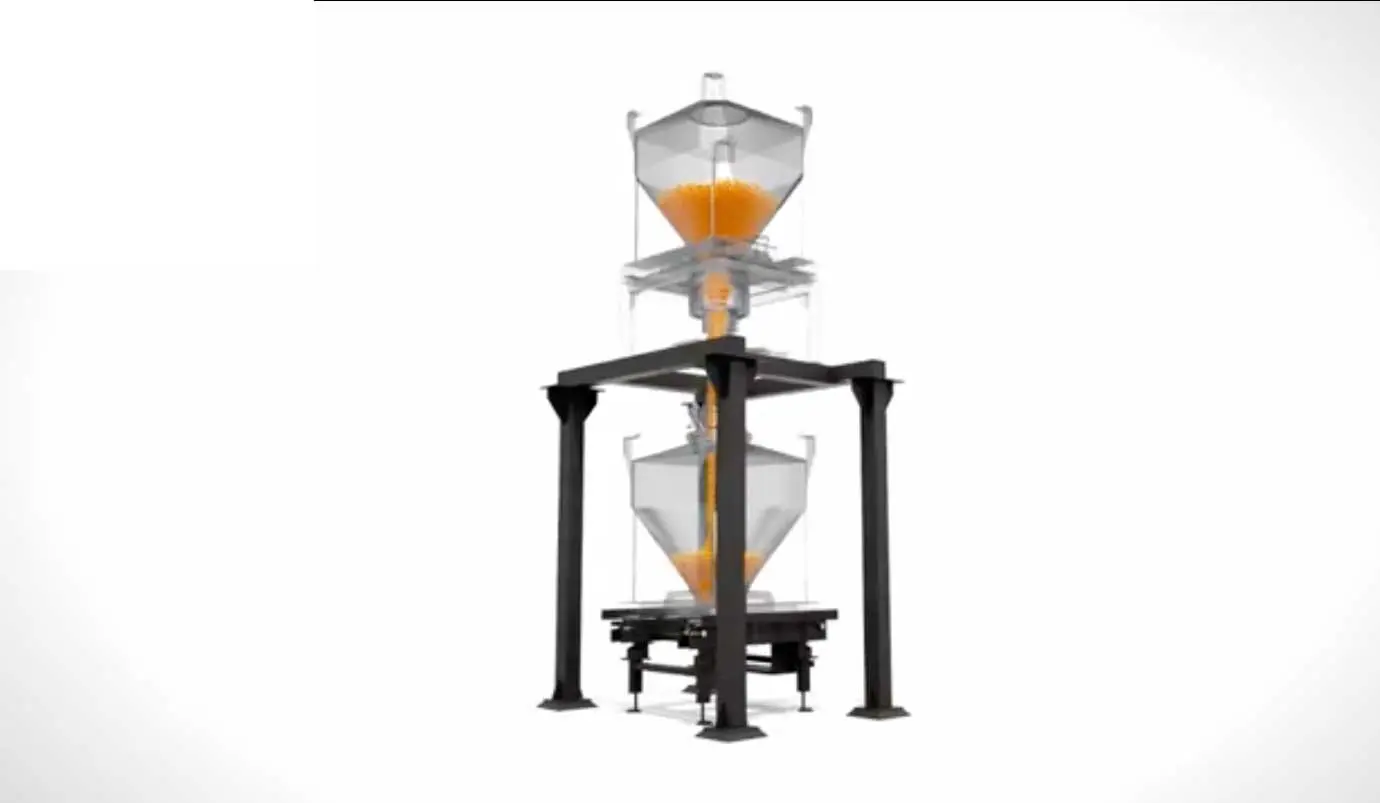
ISL's IBC Tumble Blender is designed for in-bin blending of bulk solids, allowing blending to take place within the IBC.
Rather than requiring the ingredients to be transferred into a separate blending vessel and then discharged into another container, the system makes the IBC itself part of the blending operation.
Key Equipment Features

Designed for in-bin blending of bulk solids.
IBC loading using a forklift.
A locking arrangement and safety-key procedure for operation.
Preset blending speed and timer through the control system.
Stainless steel contact-part options, including SS304 and SS316/316L.
Mild steel or stainless steel options for non-contact parts, depending on configuration.
Available configurations include 1000 L and 2000 L sizes, with other sizes available on request.
The appropriate equipment configuration depends on the application, material characteristics and production requirements.
Where IBC Blending Can Make a Difference
Simplifying Powder Blending Across Industries
IBC blending can be considered wherever compatible bulk-solid ingredients need to be mixed and unnecessary intermediate transfers create operational challenges.

Food Ingredients
Support a more direct blending workflow for suitable powdered ingredients, with material-contact surfaces and cleaning requirements selected for the application.

Nutraceuticals
Reduce unnecessary transfers when blending compatible powdered ingredients, while considering batch identification, cleaning and cross-contamination controls.

Chemical Processing
Simplify the handling sequence for suitable powder blends, with equipment configuration based on material properties and applicable safety requirements.

Plastic Compounding
Blend compatible powders, additives and other bulk-solid ingredients before downstream processing, where the application and required mixing performance are suitable.

Building Materials
Support blending of suitable dry ingredients while reducing the need to move material between multiple containers.

Other Bulk-Solids Applications
Evaluate IBC blending for industrial processes where in-container mixing could simplify the production workflow.
Material suitability, blending performance, hygiene requirements and equipment compatibility must be assessed for each application.
What Changes When You Reduce Transfers?
Improve the Workflow Around Blending
- 01
Fewer Intermediate Transfers
Blending within the IBC can eliminate the need for certain transfers between a separate blender and intermediate containers.
- 02
Reduced Manual Handling
A more direct workflow can reduce the number of container movements and manual transfer activities required.
- 03
Better Management of Dust and Product Loss
Reducing transfer points can help manage opportunities for dust release and material loss. Actual containment depends on the complete process and its interfaces.
- 04
Simplified Cleaning Requirements
Fewer containers and transfer points may reduce the number of items requiring cleaning. The IBC and blending equipment will still require appropriate cleaning.
- 05
Improved Material Recovery
Reducing intermediate equipment and transfers can limit locations where product residue may accumulate.
- 06
A More Coordinated Production Process
The same IBC can be used for blending and subsequent material handling where the application and process design permit.
- 07
Potential for Reduced Process Time
Removing unnecessary transfers and associated preparation steps may shorten parts of the production cycle. Actual time savings depend on the existing workflow and the selected configuration.
IBC Blending vs Conventional Blending
Consider the Entire Process, Not Just the Equipment
| Consideration | Conventional Transfer-Based Blending | IBC Blending |
|---|---|---|
| Blending location | Separate blending vessel |  Within the IBC |
| Intermediate transfers | May require transfer into and out of a separate blender | Can eliminate certain intermediate transfers |
| Container handling | Depends on the number of containers and process stages | Can simplify handling when the IBC continues through subsequent stages |
| Cleaning requirements | May include the blender, intermediate containers and transfer equipment | May reduce the number of separate items requiring cleaning |
| Downstream movement | Product may need to be transferred into an IBC or another container | The same IBC can move to the next stage where suitable |
| Process suitability | Depends on the blender and material requirements | Depends on material properties, required mixing performance and IBC compatibility |
The key consideration: IBC blending is not automatically the right choice for every powder. The benefit comes from matching the blending method to the material and the wider production process.
Why ISL Technologies?
Design the Blending Process Around Your Production Flow
Choosing a blending system involves more than selecting a machine. It requires understanding how ingredients enter the process, how they should be mixed and where the finished batch needs to go next.
IBC-Based Blending
ISL's IBC Tumble Blender allows compatible bulk solids to be blended within the IBC.
A Focus on Material Flow
The system can be considered as part of a wider workflow covering ingredient preparation, blending, storage and downstream handling.
Configuration Options
Material-contact and non-contact construction options can be selected according to the application.
Integration with Bulk-Solids Handling
IBC blending can be evaluated alongside suitable IBC containers, discharge arrangements and other bulk-material handling equipment.
Application-Specific Engineering
Material characteristics, batch size, cleaning requirements and downstream operations help determine whether IBC blending is suitable.
Is IBC Blending Right for Your Process?
Start with the Material and the Workflow
Before selecting an IBC Blending System, consider:
Understanding these requirements helps determine whether IBC blending can simplify the current process and which configuration is appropriate.

FAQ
Frequently Asked Questions
Can't find your answer? Our engineers are happy to talk through your application.
Ask an EngineerAn IBC Blending System allows compatible bulk-solid ingredients to be mixed within an intermediate bulk container rather than requiring all blending to take place in a separate vessel.
When ingredients are introduced into an IBC and blended within it, the process can eliminate the need to transfer the material into a separate blender and then back into another container.
An IBC Tumble Blender is equipment that tumbles a secured IBC to mix the bulk-solid materials inside it. The blending cycle is configured according to the equipment and process requirements.
Yes, where the process is suitable, the IBC can be moved to a subsequent stage such as storage or discharge without transferring the blended batch into another container.
No blending process should be assumed to eliminate dust completely. IBC blending can reduce certain transfer points, which may help manage dust generation. The overall result depends on ingredient charging, container connections, discharge arrangements and the wider process.
No. The IBC and blending equipment still require appropriate cleaning. However, eliminating certain intermediate containers and transfer steps may simplify the overall cleaning workflow.
ISL's documented IBC Tumble Blender configurations include 1000 L and 2000 L sizes. Other sizes can be considered on request.
Not necessarily. Suitability depends on material properties, the required blend quality, batch size and process conditions. Application assessment and trials may be necessary to establish the appropriate blending procedure.
It can be considered as part of a wider IBC-based material-handling process. Compatibility with discharge stations and other equipment must be confirmed for the selected configuration.
Fewer Transfers. A Simpler Blending Process.
If your current blending workflow involves repeated container movements, intermediate transfers and additional cleaning steps, it may be worth evaluating an IBC-based approach.
ISL Technologies can help you assess whether blending within the IBC is suitable for your materials and production process.