
Solutions · IBC Discharge Systems
Reliable Powder Flow Starts with the Right IBC Discharge Solution.
Getting material into an IBC is only half the process. Fine, cohesive or compacted powders can bridge, form rat-holes or discharge inconsistently, creating challenges for production, material handling and operator safety.
ISL Technologies designs IBC Discharge Systems around the characteristics of the material and the requirements of the downstream process. By integrating Cone Valve Technology with suitable docking, connection and feeding equipment, ISL helps deliver a more controlled approach to bulk-solids discharge.

Engineered discharge systems for powders that don't always flow as expected.
The Challenge
The Powder Is in the IBC. Can You Get It Out Reliably?
Not every powder flows freely under gravity. Material characteristics, storage conditions and the geometry of the discharge arrangement can influence how a powder moves through an IBC outlet.
When flow becomes unpredictable, the consequences can extend throughout the production process.
 01
Bridging
Powder forms a stable arch above the outlet, preventing material from flowing out of the IBC.
 02
Rat-Holing
Material flows through a narrow central channel while powder remains around the sides, leaving part of the IBC contents behind.
 03
Compaction
Powder settles or consolidates during storage and handling, making discharge more difficult.
 04
Inconsistent Discharge
Material may flow intermittently rather than at the rate required by the downstream process.
 05
Uncontrolled Material Release
A blockage may suddenly collapse, releasing accumulated material faster than the receiving equipment can comfortably handle.
 06
Manual Intervention
Operators may need to investigate flow problems or intervene to restore discharge, creating additional handling, exposure and process-interruption concerns.
The Real Cost of Unreliable Discharge
Poor powder flow can affect more than the time it takes to empty an IBC. It can interrupt downstream feeding, complicate dosing, leave recoverable product in the container and increase the need for operator attention. The solution starts with understanding the powder and designing the discharge system accordingly.
The ISL Solution
Discharge Designed Around Your Powder
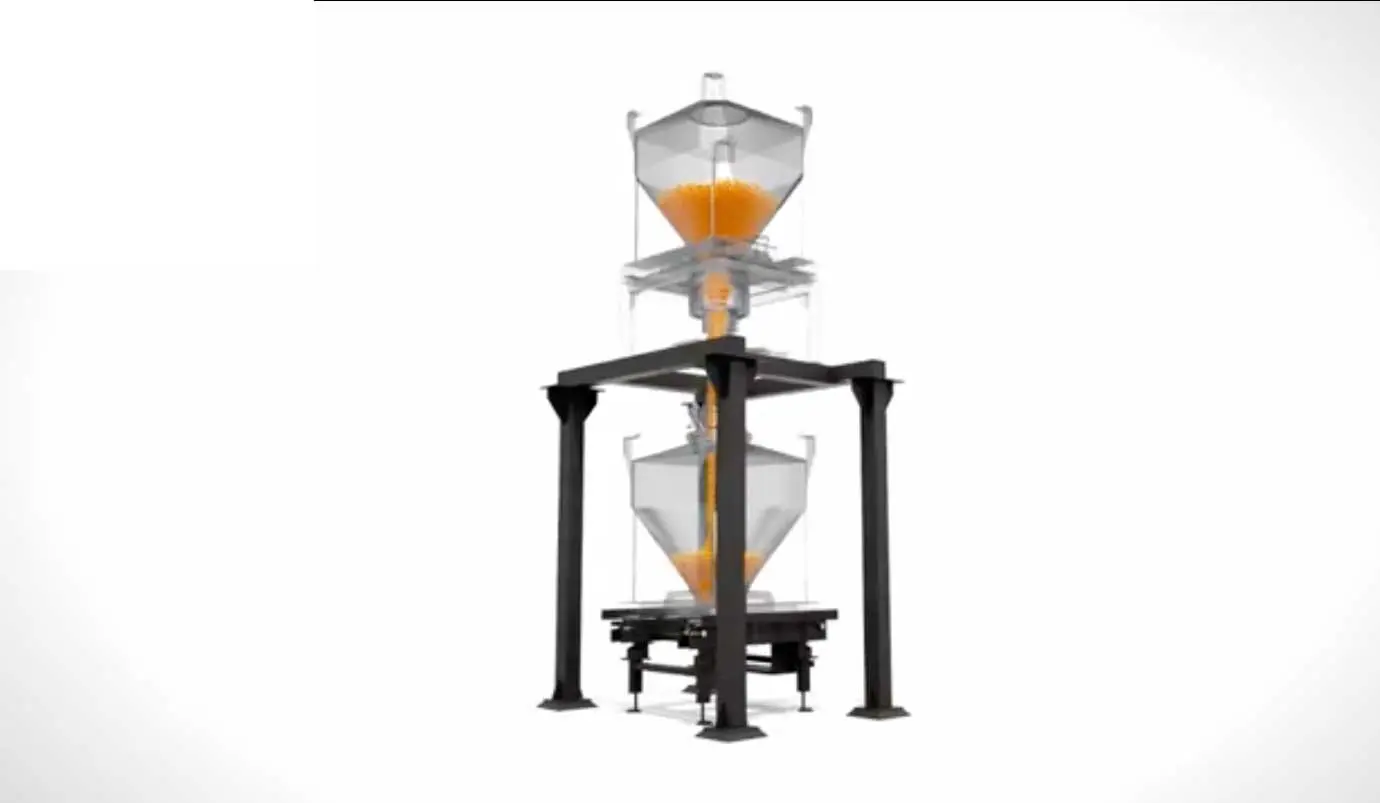
ISL IBC Discharge Systems are engineered to suit the material being handled and the process receiving it.
Rather than treating discharge as a simple opening at the bottom of a container, ISL considers the complete interface between the IBC, its outlet, the discharge mechanism and the downstream equipment.
Depending on the application, the system can incorporate:

Cone Valve Technology
A controlled discharge mechanism designed to regulate the opening through which bulk solids flow.

IBC Docking Systems
An interface for positioning and connecting the IBC to the receiving equipment.

Flexible Connections
Suitable connections between equipment to accommodate the required interface while supporting the intended material-handling arrangement.

Feeding and Conveying Equipment
Downstream equipment selected to receive, feed or transport the discharged material.

Vibration Assistance
Where appropriate, a frame vibrator can assist material discharge. Its suitability depends on the powder characteristics and system configuration.
 The objective is to develop a discharge arrangement that works with the powder's behaviour and the needs of the production process.
Cone Valve Technology: The Core of Controlled Discharge
Control the Opening. Manage the Flow.
At the heart of ISL's bulk-solids handling technology is the Cone Valve.
The Cone Valve uses plant air to lift the valve cone, changing the available discharge opening. By controlling the cone's position, the system can adjust the aperture through which material leaves the IBC.
This provides a mechanism for controlling discharge rather than relying solely on an unrestricted outlet.
Actual flow behaviour depends on the powder, IBC configuration, valve opening, receiving equipment and process conditions. Controlling the aperture does not guarantee that every powder will flow freely.
Choosing the Right Discharge Configuration
Match the Equipment to the Application
- 01
Standard Discharge Station
For applications requiring controlled discharge and integration with downstream processes.
The Standard Discharge Station uses a position transducer to monitor the valve position and control its aperture.
Depending on the configuration, it can support applications requiring:
 Controlled adjustment of the discharge opening.
- Integration with appropriate weighing equipment for gravimetric feeding.
- Batch or continuous feeding arrangements where supported by the complete system.
- Optional stainless steel shear-beam load cells.
- Optional frame vibrator.
- Lift-height sensing and limit-switch arrangements.
- An environmental seal.
This configuration is worth considering when the application requires adjustable discharge control or integration with a weighing and feeding process.
- 02
Basic Discharge Station
For applications requiring a simpler discharge arrangement.
The Basic Discharge Station uses a fixed central probe to create an annular gap as the IBC is lowered into position.
Depending on the selected configuration, it can include:
- A fixed-probe discharge arrangement.
- A frame vibrator.
- Optional level sensing.
- An optional roller limit switch.
- An environmental seal.
Unlike the Standard Discharge Station, the Basic configuration does not use position-transducer-based aperture control.
It may be suitable where a simpler discharge arrangement meets the requirements of the material and downstream process.
Final configuration and suitability should be established through application assessment.
Supporting Equipment for a Complete Discharge Process
More Than a Valve at the Outlet
Reliable discharge depends on how the entire material-handling system works together.

IBC Containers
The container, outlet and valve arrangement must be compatible with the selected discharge station.
Explore IBC Containers

Docking and Positioning
The IBC must be correctly positioned and connected to the receiving equipment for the intended operating sequence.
Explore Discharge Stations
Flexible Connections
Appropriate connections can bridge equipment interfaces and support the required transfer arrangement.

Weighing Systems
Where required, compatible load cells and weighing controls can support gravimetric feeding or batch-weight measurement.

Downstream Feeding Equipment
Receiving and feeding equipment must be selected to suit the required material flow and production rate.

Conveying Systems
Discharged material can be directed towards suitable downstream conveying equipment where the application requires it.
The combination depends on whether the process requires simple emptying, controlled feeding, weighing or integration with a larger production line.
Designed for Different Powder Challenges
Because Not All Powders Behave the Same Way
A discharge solution must account for the physical properties of the material, not simply the capacity of the IBC.

Fine Powders
Fine particles may create dust and exhibit flow behaviour that requires careful evaluation of the discharge arrangement.
Cohesive Powders
Materials that adhere to themselves may bridge or form rat-holes, depending on their properties and storage conditions.
Compacting Materials
Some powders become more difficult to discharge after settling or consolidation during storage.
Materials Requiring Controlled Feeding
Where the downstream process requires a controlled feed rate, the discharge mechanism and receiving equipment must be designed together.

Products Requiring Contained Handling
The docking arrangement, seals and downstream connections should be selected to suit the product and the required containment approach.
ISL assesses these requirements to help determine an appropriate discharge configuration.

Where IBC Discharge Systems Are Used
Reliable Discharge Across Bulk-Solids Applications

Food Ingredients
Discharging suitable powders and granules into mixing, processing or packaging operations, with attention to hygiene and material-contact requirements.
Nutraceuticals
Handling formulated powders while considering batch integrity, cleaning and the required downstream feeding process.
Chemical Processing
Discharging bulk solids into suitable receiving equipment, with configuration based on material properties and applicable safety requirements.
Plastic Compounding
Supplying powders, additives and other compatible bulk solids to downstream feeding or compounding operations.
Building Materials
Moving suitable powdered ingredients from IBCs into mixing, batching or processing equipment.
Other Industrial Applications
Evaluating IBC discharge arrangements for applications where material flow, controlled feeding or integration with downstream equipment presents a challenge.
Material compatibility and the appropriate configuration must be assessed for each application.
What a Better Discharge System Can Help Achieve
Improve the Way Material Moves Through Your Plant
No single discharge mechanism can eliminate every powder-flow problem. Performance depends on material characteristics, equipment configuration and operating conditions.
- 01
More Controlled Discharge
Adjustable valve aperture control can help regulate the discharge opening in compatible system configurations.
- 02
Reduced Reliance on Manual Intervention
An appropriately designed discharge arrangement can reduce the need for operators to intervene when flow problems occur. Results depend on the material and application.
- 03
Integration with Feeding Operations
The discharge system can be designed around the requirements of the downstream feeding or conveying process.
- 04
Support for Gravimetric Feeding
The Standard Discharge Station can be configured with appropriate weighing equipment for supported gravimetric feeding applications.
- 05
Reduced Unnecessary Handling
A suitable docking and transfer arrangement can reduce the need to move material into additional intermediate containers.
- 06
A More Coordinated Production Line
Connecting the IBC, discharge station and receiving equipment as a system helps align discharge with the wider production process.
Why ISL Technologies?
Bulk-Solids Discharge Is About More Than Opening a Valve
Reliable discharge requires an understanding of how a powder behaves and how the receiving process needs to operate.
Cone Valve Technology
ISL's Cone Valve provides an adjustable discharge aperture through a pneumatically actuated mechanism.
Application-Specific Configuration
The discharge station can be selected according to the required level of aperture control, weighing integration and downstream process requirements.
Integrated Material Handling
Docking, connections, discharge and receiving equipment can be considered together rather than designed as disconnected components.
Options for Different Operating Requirements
Standard and Basic discharge station configurations provide different approaches to discharge control.
A Focus on the Complete Process
The objective is not simply to empty an IBC, but to deliver material into the next stage of production in a manner suited to the application.
Planning Your IBC Discharge System
Start with the Powder and the Receiving Process
To determine the appropriate discharge arrangement, it is useful to establish:
These details help determine whether the Standard or Basic Discharge Station is appropriate and which additional equipment may be required.
FAQ
Frequently Asked Questions
Can't find your answer? Our engineers are happy to talk through your application.
Ask an EngineerAn IBC Discharge System transfers bulk solids from an intermediate bulk container into downstream equipment. Depending on the application, it may include a discharge valve, docking arrangement, flexible connections, weighing equipment and feeding or conveying systems.
Powder flow depends on particle characteristics, cohesion, moisture, consolidation, container geometry and outlet conditions. Some materials can bridge, form rat-holes or discharge inconsistently.
Plant air lifts the valve cone, creating a discharge opening. The cone position can be adjusted in compatible configurations to change the available aperture and help regulate material discharge.
The Standard Discharge Station uses a position transducer for valve-aperture control and can support integration with appropriate weighing equipment. The Basic Discharge Station uses a fixed central probe to create an annular gap as the IBC is lowered and does not provide position-transducer-based aperture control.
The Standard Discharge Station can be configured for supported gravimetric feeding applications using appropriate weighing equipment and controls. The required arrangement depends on the application.
A suitable system may help manage discharge challenges, but no configuration should be assumed to eliminate bridging or rat-holing for every powder. Material properties and equipment suitability must be evaluated.
A frame vibrator is available as an option on the documented discharge station configurations. Its suitability depends on the powder and the system design.
Integration can be considered when designing the complete discharge arrangement. Compatibility depends on the receiving equipment, required flow, connection interfaces and process conditions.
Not necessarily. Adjusting the valve aperture can help regulate discharge, but actual flow also depends on the powder, material head, receiving equipment and operating conditions. Consistent flow must be assessed for the complete application.
Is Your Powder Discharging the Way It Should?
Bridging, rat-holing, inconsistent flow and repeated manual intervention can affect production well beyond the IBC itself.
ISL Technologies can help you assess your material, identify the discharge requirements and determine a suitable combination of Cone Valve Technology, docking equipment and downstream handling systems.