
Solutions · IBC Washing System
Clean Faster. Reuse Sooner. Maintain Better Hygiene.
Reusable IBCs help simplify material handling, but cleaning them between products can become a time-consuming and labour-intensive task. Internal surfaces can be difficult to access manually, while inconsistent cleaning practices can increase cross-contamination risks.
The ISL IBC Washing System is designed for automatic internal washing and manual external cleaning, helping streamline the cleaning process and prepare suitable IBCs for reuse.

A more systematic approach to cleaning reusable IBCs between production batches.
The Challenge
How Efficiently Can You Clean an IBC Before Its Next Use?
In production environments where IBCs are reused across batches, cleaning is an essential part of material handling.
When cleaning depends heavily on manual effort, it can become difficult to maintain a consistent process while keeping production moving.

 01
Labour-Intensive Cleaning
Manual cleaning requires operator time and effort, particularly when multiple containers need to be cleaned between production runs.
 02
Time-Consuming Operations
Cleaning, rinsing, draining and preparing IBCs for reuse can add time between batches.
 03
Difficult-to-Reach Internal Surfaces
The internal surfaces of a container can be challenging to clean thoroughly using manual methods alone.
 04
Inconsistent Cleaning Practices
Differences in cleaning procedures and operator practices can make repeatability more difficult to maintain.
 05
Cross-Contamination Risks
Residual material from a previous batch may contaminate a subsequent product if the required cleaning procedure is not followed.
 06
Production Bottlenecks
When cleaned IBCs are not available when needed, container turnaround can affect the movement of materials through the plant.
The Opportunity
A dedicated washing arrangement can make internal cleaning more systematic and help reduce the manual effort associated with preparing reusable IBCs for their next use.
The ISL Solution
A Dedicated System for Internal IBC Washing
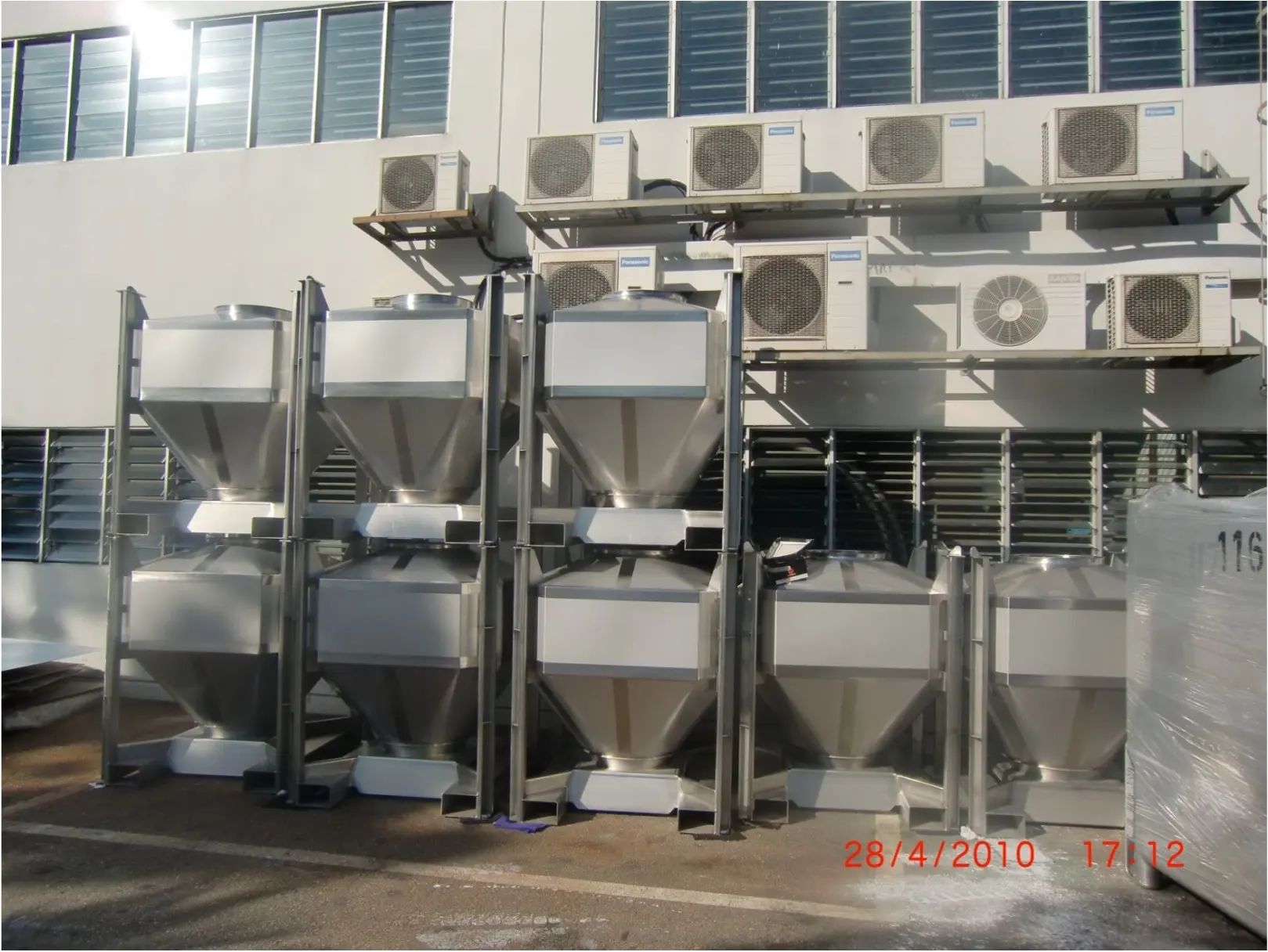
The ISL IBC Washing System is designed to wash the internal surfaces of reusable IBCs automatically, while external cleaning is performed manually.
The IBC is positioned on a drainage frame, and a dedicated washing lid provides access for high-pressure internal cleaning.
A dedicated Water Pump Skid (WPS) can supply water and cleaning solutions to the washing system, according to the selected arrangement.

Automatic Internal Washing
A dedicated washing lid provides the interface for internal cleaning without relying entirely on manual access to the container interior.

Manual External Cleaning
The outside of the IBC can be cleaned manually as part of the overall cleaning procedure.

Dedicated Drainage Arrangement
The IBC is positioned on a drainage frame to support the washing operation and drainage of the cleaning liquid.

Water and Cleaning-Solution Supply
A dedicated Water Pump Skid can supply water and cleaning solutions to the system.

A More Organised Cleaning Workflow
A dedicated washing station provides a defined location for IBC cleaning, helping integrate the task into the wider production process.
Cleaning procedures, water requirements and the use of cleaning solutions should be established according to the product, contamination risks and required hygiene standards.
How the IBC Washing System Works
From Used IBC to Container Ready for Its Next Stage
The exact sequence, cleaning parameters, inspection criteria and release procedure depend on the application and the cleaning protocol established by the operator.
Washing Lid & Water Pump Skid
The Technology Behind the System
- 01
IBC Washing Lid
The washing lid provides the interface for internal IBC washing.
It is designed for use with the washing arrangement and supports high-pressure cleaning of the container interior.
Documented Equipment Specifications:
 Inlet/lid size: 500 mm
- Water pressure: 15–20 bar
- Water flow: 72 L/min
- Tubing connection: 1 inch
- Approximate weight: 6 kg
- Contact-part material: SS304 or SS316/316L
- Non-contact material: SS304
Confirm the applicable pressure, flow, connections and material specification for the selected configuration before final system design.
- 02
Water Pump Skid (WPS)
A dedicated Water Pump Skid can be used to supply water and cleaning solutions to the washing system.
The skid can be considered as part of the overall washing arrangement, with the required configuration determined by the cleaning process and utility requirements.
Specific pump capacity, tank arrangement, heating, dosing, filtration and automation features should only be listed where confirmed for the offered WPS configuration.
What Can a Dedicated IBC Washing System Help Improve?
Make Container Cleaning Part of the Production Workflow
Actual improvements depend on the previous cleaning method, material residues, cleaning procedure and system configuration.
- 01
Reduced Manual Internal Cleaning Effort
Automatic internal washing can reduce reliance on manual cleaning methods for the inside of the IBC.
- 02
A More Systematic Washing Process
A dedicated washing arrangement provides a defined setup for internal cleaning.
- 03
Improved Container Turnaround
Organising washing around a dedicated station can help manage the time required to prepare IBCs for subsequent use.
- 04
Support for Cross-Contamination Control
A defined cleaning procedure can help manage contamination risks when containers are reused between batches.
- 05
More Organised Drainage
The drainage frame provides a dedicated arrangement for positioning the IBC during washing and drainage.
- 06
Integration with Production Operations
The washing station can be incorporated into the wider IBC handling process to support container availability between production stages.
Applications Across Industries
Cleaning Reusable IBCs for Different Production Environments

Food Processing
Cleaning reusable IBCs that handle suitable food ingredients, subject to the required hygiene procedures and material compatibility.
Pharmaceutical and Nutraceutical Manufacturing
Supporting the cleaning of reusable containers where defined cleaning procedures and appropriate contamination controls are important. Any validated cleaning or regulatory compliance requirements must be assessed separately.
Chemical Processing
Cleaning IBCs used for compatible chemical materials, with the cleaning method selected according to the product residue and chemical compatibility.
Plastic Compounding
Cleaning containers used to handle compatible powders, additives and other bulk solids between production runs.
Building Materials
Supporting the reuse of suitable IBCs used for powdered and granular ingredients.
The appropriate washing procedure depends on the previous contents, the residue characteristics and the requirements for the next product.
Choosing the Right Cleaning Approach
Cleaning Requirements Depend on What the IBC Has Handled
Not every material requires the same cleaning procedure. Before selecting the washing arrangement, consider:
These considerations help establish a suitable cleaning procedure and determine whether additional equipment or process controls are required.
- 01
Previous Product
What material was held in the IBC, and what residue is likely to remain?
- 02
Residue Characteristics
Does the material dissolve readily in water, adhere to surfaces or require a specific cleaning solution?
- 03
Next Product
Will the IBC hold the same product again or be used for a different formulation?
- 04
Cleaning Requirements
What internal and external cleaning steps are required before reuse?
- 05
Water and Cleaning-Solution Supply
What pressure, flow and cleaning agents are required for the intended procedure?
- 06
Drainage and Waste Handling
How will the used cleaning liquid be collected and handled?
- 07
Inspection and Release
What checks must be completed before the IBC can return to production?

Why ISL Technologies?
A Practical Approach to Reusable IBC Cleaning
IBC washing needs to be considered as part of the overall container-handling process, rather than as an isolated cleaning task.
Dedicated Washing Equipment
The IBC Washing System provides a purpose-designed arrangement for internal washing.
High-Pressure Internal Cleaning
The washing lid supports internal cleaning using the specified high-pressure water supply.
External Cleaning Included in the Workflow
The system approach accounts for manual external cleaning alongside internal washing.
Optional Water and Cleaning-Solution Supply Arrangement
A dedicated Water Pump Skid can supply the washing system according to the selected configuration.
Consideration of Material Compatibility
Available stainless steel contact-part options include SS304 and SS316/316L, subject to the selected equipment specification.
Integration with IBC Operations
The washing station can be considered alongside IBC storage, transport, blending and discharge processes.
FAQ
Frequently Asked Questions
Can't find your answer? Our engineers are happy to talk through your application.
Ask an EngineerAn IBC Washing System is equipment used to clean reusable intermediate bulk containers. The ISL system is designed for automatic internal washing and manual external cleaning.
The IBC is positioned on a drainage frame, and a washing lid provides the interface for high-pressure internal cleaning. A dedicated Water Pump Skid can supply water and cleaning solutions.
The system is designed for automatic internal washing. External cleaning is performed manually. The precise operating sequence depends on the offered configuration and cleaning procedure.
The documented washing-lid specification lists a water pressure of 15–20 bar and a water flow of 72 L/min. Confirm the requirements for the selected configuration during system design.
A dedicated Water Pump Skid can supply water and cleaning solutions. The appropriate cleaning solution depends on the material previously handled, the residue and the requirements for the next use.
No. The system is designed for automatic internal washing and manual external cleaning.
The documented information establishes an IBC washing arrangement with a washing lid and a dedicated water-supply option. It does not, by itself, establish validated Clean-in-Place performance, cleaning validation, automated cleaning recipes or regulatory compliance. These requirements should be discussed separately if needed.
It may be considered for suitable applications in these industries. The appropriate material specifications, cleaning procedure and any required validation or regulatory compliance must be confirmed for the specific application.
Compatibility depends on the IBC design, dimensions, lid interface, previous contents and required cleaning procedure. Confirm compatibility before selecting the system.
Keep Your IBCs Moving Through Production.
Cleaning reusable containers should not become an avoidable bottleneck between production batches.
Explore the ISL IBC Washing System to establish a more systematic approach to internal washing, drainage and container turnaround.